Cosmetic IPL Skin Care in Berlin
A non-medical IPL application with the NiSV certificate of competence. Our offer is deliberately narrower than some competitors’ — the section below explains why that is a good sign for you.
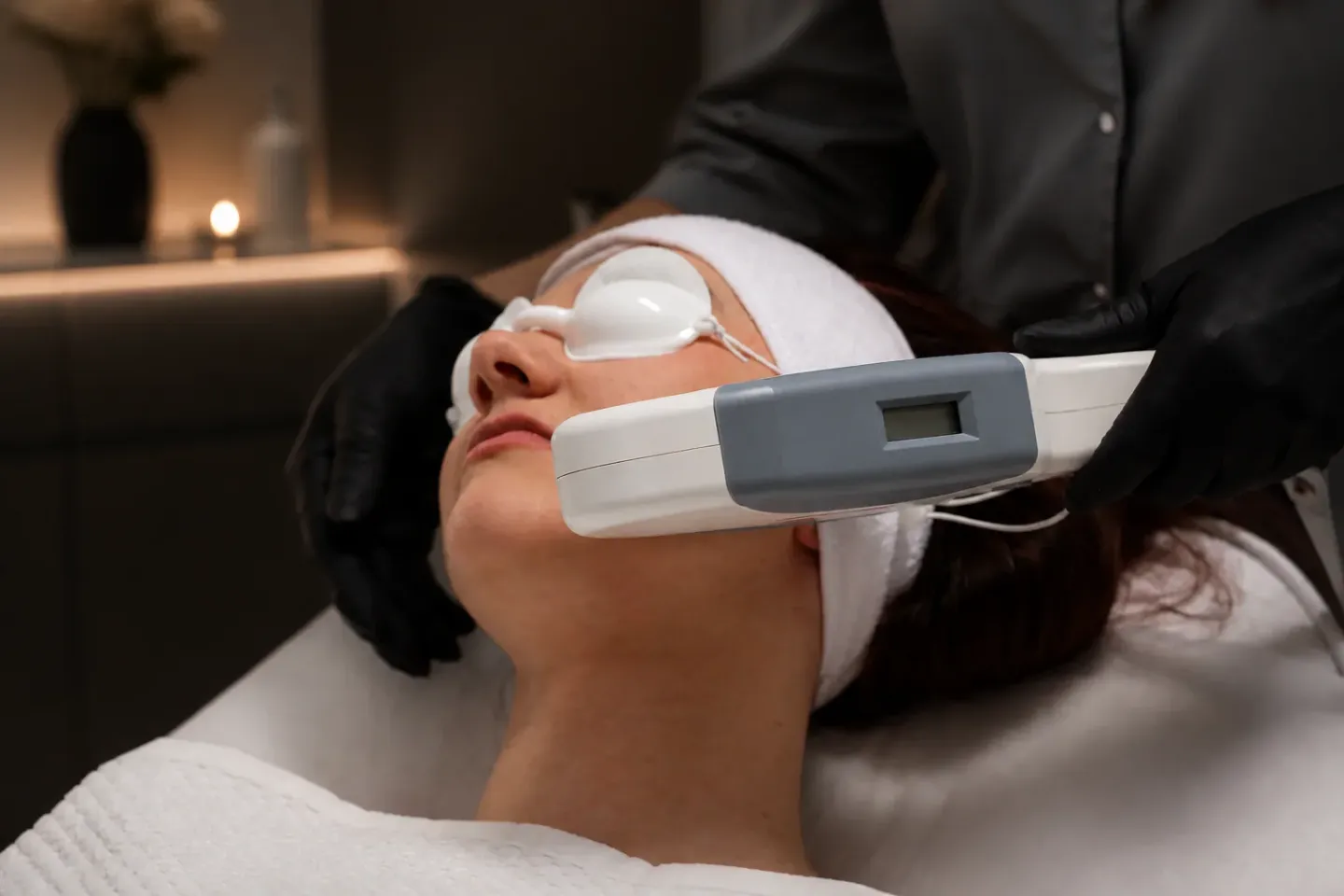
What cosmetic IPL skin care is
IPL stands for Intense Pulsed Light. Unlike a laser, which works on a single wavelength, an IPL device emits a broader spectrum of light in short pulses; filters and device settings determine which part of it is actually used. Settings follow your skin type, the manufacturer's specifications and an individual assessment.
The cosmetic aim is a cared-for, more even-looking complexion. The service is explicitly non-medical and replaces neither a medical diagnosis nor a therapy.
Why our IPL offer is narrower than elsewhere
Search for "IPL Berlin" and you will find studios advertising it for rosacea, couperose, visible vessels or pigment spots. We do not — and that is not an oversight, it is the reason our offer looks narrower at first glance.
Applications of optical radiation on vascular changes and on pigmented skin changes, as well as the removal of tattoos and permanent make-up, are reserved for physicians in Germany under the NiSV. Holding a certificate of competence does not change that: it entitles you to operate the device, not to perform those applications.
We stick to it. If you see an offer advertising exactly those points, it is worth asking who performs the treatment there, and with what qualification.
What we do not use IPL for
To be unmistakable — we do not use IPL to treat:
- rosacea and couperose
- visible vessels and thread veins
- pigment spots, age spots and melasma
- acne and other skin conditions
- conspicuous moles
- tattoos and permanent make-up
Unclear, new or changing areas of skin should be assessed by a doctor before any cosmetic application. A cosmetic consultation is not a medical examination.
The suitability check is the most important part
With a light-based application, whether it is sensible and justifiable is decided before the first pulse. We ask about your skin, sun exposure over recent weeks, medication and known light sensitivities — including herbal preparations, which few people think of.
The application only goes ahead if it is justifiable according to the device specifications and the individual assessment. When in doubt we postpone. That is not a lost appointment — it is the reason nothing goes wrong here.
How your appointment works
Initial conversation
We go through your skin, recent sun exposure, medication and possible light sensitivities.
Suitability check
We check whether the application is justifiable per the device specifications and our assessment — and decline if it is not.
Application
Eye protection for you, appropriate device settings, controlled work area by area.
Aftercare
Gentle care, consistent sun protection and guidance on handling temporary skin reactions.
Preparation — what to do beforehand
- No fresh tan. Skip sun, tanning beds and self-tanner for the two weeks beforehand — with light-based applications this is the single most important rule.
- Mention medication. Herbal preparations can make skin light-sensitive too.
- Pause acids and retinol. A few days beforehand, so the skin is calm.
- Come without make-up. Or we will cleanse the area first.
How it feels — and what is normal afterwards
During the application you may notice warmth or a brief snapping sensation. Temporary redness or a feeling of warmth afterwards is possible and usually subsides quickly.
Whether and how the complexion changes cosmetically is individual. We quote no success rates, no guaranteed effect and no blanket number of sessions — instead we tell you honestly before the first appointment what to expect in your case, and when the application is not worth it.