Which peel is right for your skin?
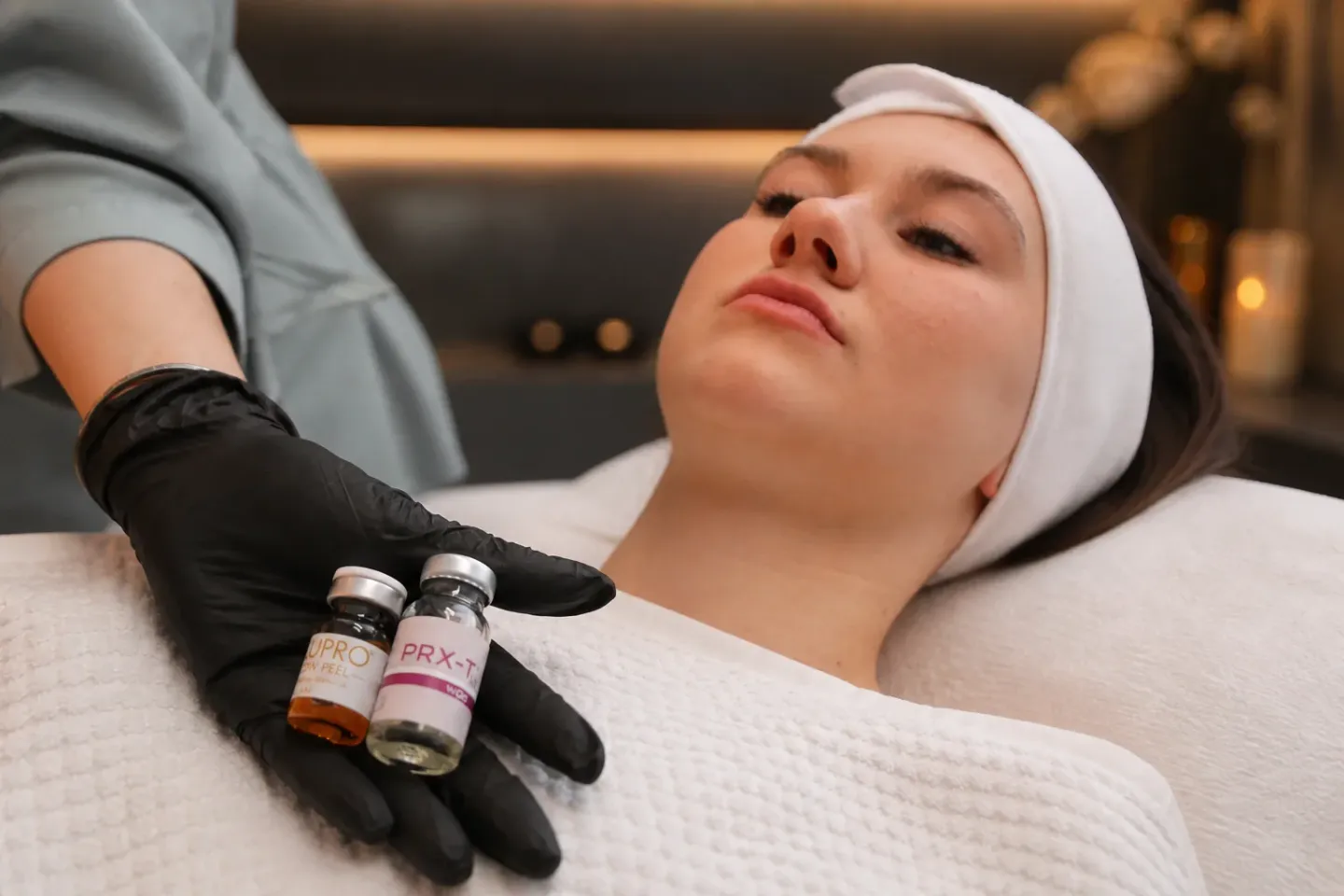
"Which peel is right for my skin?" is the most common question before a first appointment — and the hardest one to google, because online, brand names, active ingredients and depth levels are constantly mixed up. This article sorts it along the question that actually matters: what do you want to change about your skin?
First things first: the product name says nothing about the depth
A well-known brand name tells you neither the concentration nor the pH nor the contact time — and those three decide how deeply a peel works. The same product can be gentle or clearly noticeable depending on how it is used.
We work only with superficial chemical peels. Medium-depth and deep peels belong in medical hands; that is not a gap in our offering but the line where cosmetics end and medicine begins.
Which acid is meant for what
| Active | Typical concern | Characteristic |
|---|---|---|
| Enzyme peel | very sensitive skin, first appointment | works without acid, the mildest option |
| Mandelic acid | sensitive skin, tendency to redness | large molecule, penetrates slowly |
| Lactic acid | dry, tight-feeling skin | also binds moisture |
| Glycolic acid | dull skin, uneven texture | smallest molecule, acts fastest |
| Salicylic acid | congested, blemish-prone skin | oil-soluble, reaches into the pore |
| Azelaic acid | blemish-prone skin with redness | considered well tolerated |
| Ferulic acid | combination peels, care after sun | used mainly as an antioxidant |
| Retinol | more pronounced texture concerns | here only in superficial dosing |
The brand names you keep reading
BioRePeel, PRX-T33 and Jalupro GLOW (€80 each) are ready-made formulations that work in one step and usually without visible flaking — popular when you have somewhere to be the next day. Rose de Mer by Christina (€100 without, €120 with home care) is based on marine ingredients and is planned as a course. The classic Christina and Renew peels are €60. All facials with current prices are on our price list.
What all these names have in common: they describe compositions, not outcomes. The more expensive name is not automatically the more suitable one.
How to find your starting point
- You have never had a peel: an enzyme or mandelic acid peel. You learn how your skin reacts before anything stronger is used.
- Blemish-prone skin, enlarged pores: salicylic acid, often combined with a thorough facial cleansing.
- Dry, tight skin: lactic acid, ideally combined with a hydrating treatment such as AquaFacial.
- Dull complexion before an occasion: BioRePeel or PRX-T33, because they usually come without downtime.
- You want no acid at all: microdermabrasion removes the top layer of dead cells mechanically; afterwards the skin is a little more sensitive for a day or two.
- You are unsure: a consultation with skin analysis for €50, credited against a treatment booked the same day.
Whether a peel is the right choice at all or another treatment fits better — the treatment finder helps you sort it out in nine short questions.
What happens at the appointment
First the analysis and questions about medication, previous treatments and sun exposure over recent weeks. Then the skin is cleansed and degreased, the product applied and the contact time monitored — by skin reaction, not by stopwatch. If needed, it is neutralised straight away. Soothing care and sun protection finish the appointment.
A brief tingling or warmth is normal. Strong burning is not proof of effectiveness; it is the signal to end the contact time.
The week afterwards
- Sun protection daily, cloudy days included — skin is temporarily more light-sensitive.
- No scrubs or brushes, no retinol and no home acids for a few days.
- Sauna, steam room and intense sport pause for the first day or two.
- If the skin flakes: do not pull it off. Flakes come away on their own; picked areas can leave marks.
Five misconceptions we hear often
- "The more it burns, the better it works." Burning is a stop signal, not a quality mark.
- "No flaking means it was wasted." Many superficial peels work without visible shedding.
- "Nothing is possible in summer." It is — with sun protection and without a fresh tan on the day.
- "I can do the same at home for less." Home products are deliberately weaker; that is the safety margin when nobody is watching the contact time.
- "One peel for everything." The choice follows the state of your skin on the day, not the last appointment.
When a peel is not the right appointment
No peeling takes place with acute inflammation, open areas, fresh sunburn, during isotretinoin therapy, or in pregnancy and breastfeeding. Melasma, scars, deep wrinkles and diagnosed skin conditions belong in dermatological care — cosmetic care alongside is often possible, but in agreement with the treating practice.
Peels in Berlin-Friedrichshain
At Katy Beauty on Ebertystraße 32 the range runs from enzyme and acid peels at €50 up to Rose de Mer at €120 with home care. All variants and prices are listed on the page for chemical peels. What others write after their visit is in our reviews.
Frequently asked questions
How do I know which peel suits me?
Not from the product name, but from your concern and the state of your skin on the day. Roughly: mandelic and lactic acid for sensitive or dry skin, salicylic acid for congested, blemish-prone skin, glycolic acid for smoother texture, an enzyme peel as the gentlest way in. The final choice is made after the skin analysis.
Does skin have to peel afterwards?
No, and visible flaking is not a measure of success. Many superficial peels work without any shedding at all. Anyone selling flaking as proof of quality is confusing a side effect with the effect.
Can I have a peel in summer?
Yes, but with consistent sun protection and without a fresh tan on the day. Skin is temporarily more light-sensitive afterwards, so if you are flying to the beach straight after, it is better to move the appointment.
What is the difference between a studio peel and a home peel?
Concentration, pH and supervision. Home products are deliberately weaker so they are safe without supervision. In the studio the dosing is stronger, but the contact time is monitored and neutralised immediately if needed.
How many appointments do I need?
Superficial peels are usually planned as a series, often two to four weeks apart. We do not promise a fixed number in advance, because reaction and skin condition are individual.
What are BioRePeel, PRX-T33 and Rose de Mer?
They are brand names for differently composed products, not depth levels. BioRePeel, PRX-T33 and Jalupro GLOW cost €80 each here, Rose de Mer €100 without and €120 with home care. Which one fits is decided by your skin, not by the better-known name.
Does a peel sting?
A brief tingling or feeling of warmth is normal. Strong burning is not a sign of effectiveness but a signal to neutralise — so say it immediately instead of enduring it.
What does a peel cost here?
From €50 for acid and enzyme peels, €60 for Christina, Renew and retinol peels, €80 for BioRePeel, PRX-T33 and Jalupro GLOW, and €100 to €120 for Rose de Mer. The consultation including skin analysis costs €50 and is credited against a treatment booked the same day.
Note: this article describes a cosmetic, non-medical treatment and does not replace medical diagnosis or treatment. Suitability, reaction and outcome are individual. Manufacturer specifications, safety assessment and the required qualification take precedence.
You might also like